


Modern man is exposed to physical inactivity and the influence of a polluted atmosphere, and the use of dozens of harmful food additives does not improve health.This weakens your immune system and makes you more prone to infections that lurk every time.More than 20% of the world's population is infected with dermatomycosis or a fungal infection.The legs are especially often affected.Medicine successfully treats this disease, but due to certain circumstances, many people prefer to treat it themselves.Let's see how to properly treat athlete's foot at home.
Types of fungal infections of the foot
The appearance of the fungus on the foot is an infection of the epidermis (outer layer of skin) of the interdigital zone of the foot and nail plates, with the possible spread of microscopic fungi in the body.Defeat can be caused by:
- yeast fungi;
- form;
- dermatophytes.
But usually this disease is called dermatomycosis.
The visible signs of the fungus depend on the causative strain.Types of mycoses:
- Onychomycosis - this disease affects the nail plates and progresses in different ways.In the first case, the toenails change color, break and thicken.With atrophy, the nail plate is completely destroyed and the underlying skin hardens.
- In the case of squamous mycosis, the skin becomes red and itchy, peels, and the condition becomes a painful itch.
- The dyshidrotic form of the fungus is characterized by the formation of watery blisters with a diameter of up to 5 mm, which gradually merge with each other and form ulcers.
- Intertriginous mycosis is the most common type of fungus that occurs as cracks in the skin between the toes, usually closer to the little toe.It is characterized by severe itching.
What are the causes of mycoses on the feet?
- Many healthy people strive to stay in shape.They visit fitness clubs, beaches, swimming pools and saunas, where fungal organisms multiply rapidly in a warm environment.Fungal infections usually occur in these public places.
- When a family shares slippers, towels, bath and shower mats and hygiene products.One carrier of the fungus can infect the whole family.
- Weakened immunity contributes to the spread of foot mycoses in the elderly.Statistics show that men are more likely to be infected with the fungus.
- The indiscriminate use of drugs (glucocorticosteroids, immunosuppressants, antibacterial, cytostatic agents) also causes the risk of fungal infections of the feet.
- Fungal infection of the foot is possible due to occupational factors.Mine workers, workers in metallurgy, the military, and the maintenance workers of baths, saunas, and sports facilities are more often susceptible to infections.
- A person's lifestyle and the presence of chronic diseases, such as diabetes, vascular and somatic diseases, endocrine disorders (especially excessive sweating), osteoarthritis, overweight.
- Cuts and microcracks on the skin, corns and calluses on the feet, hallux valgus.
- Adverse environmental situation.
Athlete's foot usually develops in several periods:
- The incubation period depends on the state of the human immune system.The stronger it is, the later the signs of foot mycosis appear.
- The period following the incubation period is characterized by redness of the skin, itching and the appearance of microcracks.Sometimes the legs swell.At this stage, the development of the infection can be stopped easily, even with folk remedies.
- In the third stage, the disease becomes more dangerous: the skin peels off, large lesions develop, and the skin begins to gradually peel off.The cracks deepen, causing significant pain.The nail plates are deformed.From this period on, the treatment will be complex and protracted.
- The chronic form of mycosis is associated with frequent relapses and can last for several years.If the fungus has progressed to this extent, consult a doctor immediately to avoid irreversible consequences of the disease.
How to cure athlete's foot at home
Only after performing a qualified diagnosis (scraping, examination of strains, microscope) can the specialist prescribe effective means to combat athlete's foot.In addition to drug therapy, folk remedies can also be used against fungus.
There are many ways to get rid of athlete's foot at home.Their advantage is the affordable price and minimal contraindications.But even harmless folk remedies should be used in combination with basic medicines, in consultation with the doctor.
The most effective antifungal agents
For the treatment of fungus, there are many dosage forms in the form of tablets, suppositories, creams, ointments and suspensions, sprays and lotions, which have fungicidal properties and prevent the growth of bacteria.These products can quickly remove the fungus from the affected skin if it is in the early stages of the disease.
In the complex treatment of foot mycoses, the following drugs are usually used:
- tablets against athlete's foot;
- antifungal ointment applied twice a day to sore spots.
In addition to drug therapy, there is an innovative method of treating the fungus - a hardware method that quickly eliminates the symptoms of mycosis in painful areas, but does not guarantee that there will be no relapse.
Folk recipes
In addition to the main therapy, the treatment of athlete's foot with folk remedies is used.Many methods are known to treat the problem at home: these are baths based on all kinds of natural substances, poultices and antifungal masks.
The most effective of these for the treatment of mycoses are the following:
- Potassium permanganate solution.It is recommended to steam your feet in a warm bath before going to bed, then wrap them in gauze soaked in this solution and leave them overnight.
- Baths containing 1.5 tablespoons of sea salt.l.per liter of water.
- Copper sulfate.You can use it to deal with athlete's foot: 1 tsp.of this material in a pan until white, then mix with the same amount of yellow sulfur and goose fat.Mix the ingredients thoroughly and apply a thin layer of the resulting ointment on your feet while it is warm.Wash off after 40 minutes.
- Vinegar to treat fungus is the fastest way to get rid of the problem.Among its types (apple, wine), the most effective is simple 9% vinegar, diluted 1:8 with water, used as a slightly warm bath 4-5 times a day for 2-3 days.
- Baking soda paste also helps to fight athlete's foot.Apply it to the affected areas of the foot and leave it on for 20 minutes, then wash it off.Baking soda can also be mixed with salt and similarly applied to your feet.
- A foot compress with a peroxide solution helps to cure the fungus.To do this, you first need to steam your feet in a warm water bath.Then make a solution of 1 tsp of 1 liter of water.soda and 2 tbsp.l.peroxide, soak the gauze and wrap your feet with it.Leave it on for an hour and then rinse it off.
- Onion recipes help to cope with the problem.Grate 2 large onions on a coarse grater, squeeze the juice from the resulting pulp and apply it to your feet.Wait for it to absorb, put on socks and leave it on overnight, then wash it off your feet in the morning.Garlic juice has a similar effect on fungi.
- The use of celandine is also effective against fungi.Mix its juice (5 drops) with half a teaspoon of marigold tincture and 5 drops of oregano oil, as well as a teaspoon of water.The resulting mixture is used to treat the affected areas of the legs without rinsing.
Care and hygiene rules
If you use home medicated poultices and foot baths for the fungus along with prescribed medications, you can get rid of it fairly quickly.Special care should also be given to the feet to preserve the condition of the skin during this period and to promote healing.
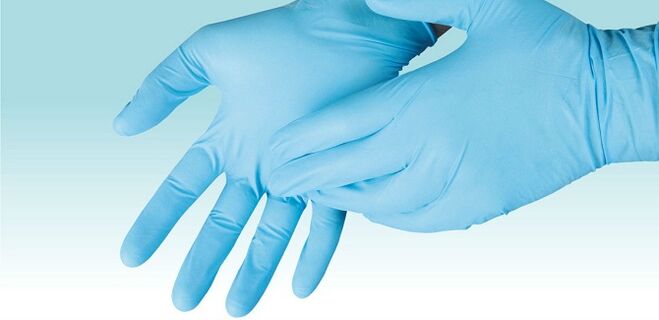
Before treating areas affected by fungal infection of the feet and nails, first put on disposable gloves.
Shoes must be treated with special products (vinegar and mustard powder will also do).If possible, it should be replaced with products made from natural materials.After each wear, the shoes should be placed on the balcony for ventilation.If it gets wet, be sure to dry it completely and change the insole more often.
During the period of fungal disease, do not go to the pool, sauna, beach, do not use your other shoes, slippers, towels, so as not to infect other family members with the fungus.After healing, it is advisable to get rid of the old socks and replace the insoles in the shoes, as well as treat them with vinegar.This also applies to rubber mats in the bathroom.This is done to destroy fungal spores that can reoccur or infect other people's feet.
Prevention of relapse and reinfection
In order to avoid re-infection with foot fungus and to get rid of it forever, you should pay special attention to foot hygiene.To do this, you need to remember a few simple rules:
- wear only your own shoes and clothes;
- choose shoes made of natural materials;
- do not allow steaming feet to be in shoes;
- wash your feet regularly, preferably in the morning, before going to bed and after coming from outside;
- take care of your shoes: dry them from the inside, treat them regularly with special deodorants;
- supports immunity.
Feet require regular care and attention.Any discomfort in the legs and external changes in their area justify a visit to a specialist.